By Estrella Sendra

South Africa has a strong young female face – Ayanda. This 21 year-old Afro-hipster is a creative youth fun character, determined to revive her father’s prized garage business, eight years after his tragic death. The film is set in Yeoville, a vibrant community in Johannesburg that hosts African migrants from across the continent, searching for a better life. Set in this district, Ayanda is a coming-of-age story of a young woman who embarks on a journey of self-discovery when she’s thrown into a world of greasy overalls, gender stereotypes and abandoned vintage cars once loved, now in need of a young woman’s re-inventive touch to bring them back to life again. In order to achieve her goal, Ayanda will persuade her brother and the mechanic David, interpreted by the Nigerian acclaimed actor OC Ukeje, who starred in Gone Too Far, a British-Nigerian comedy directed by Destiny Ekaragha which was part of last year Cambridge African Film Festival.

Ayanda, directed by multi-awarded South African filmmaker Sara Blecher, opened the 36th Durban International Film Festival earlier this year, four years after her previous film Otelo Burning also opened this festival in 2011. While the latter draw on masculinity, Ayanda focuses on women, and very particularly on a young South African woman who presents new horizons for audiences in the country. The debut actress, Fulu Mugovhani, dominates the screen by an overwhelming energetic performance, whose creations are coherently complemented by the aesthetical choices of the filmmakers. With the photos of photographer The Expressionist, who plays himself in the film in an attempt to ‘portray a country reinventing itself’, and the animation that translates Ayanda’s imagination, the director successfully manages to present an optimistic world view, which is, in this case, led by a young South African woman.

Entertainment blog Indiewire called the film “an important and fascinating piece that is absolutely worth seeing for its representation of a modern African story, which is uniquely, distinctively African, but also urban, fresh, and contemporary in a way that is far too rare. Anchored by a standout performance by the magnetic Fulu Mugovahni, the vibe and milieu of Ayanda is as refreshing as a light summer breeze.”

The director, who was recently in the BFI London Film Festival presenting the film, defined it as a “love letter to Joburg” a place where the world merges. Ayana does indeed place us in a vibrant and diverse Johannesburg where the youth cannot really move forward until they grapple with the past. This intertwined connection between the past and the present, after 21 years of freedom in the country, is embodied in Ayanda’s commitment to keep her dead father’s garage alive.

Following the last edition of the Cambridge African Film Festival, celebrating the 20 years of freedom in South Africa, Ayanda is an illustrative film of this festival’s mission, counter-balancing the stereotypical representation of the continent, with a focus on the work by women filmmakers and bringing to the UK some of the best contemporary African films – a unique opportunity for the city of Cambridge to watch this film.

The screening will take place on Tuesday 20 October at 6 PM at the Cambridge Arts Picturehouse, and will be followed by a Q&A with South African film scholar Dr Litheko Modisane (University of Cape Town), in conversation with festival director, Estrella Sendra. Tickets can be booked here.

The festival will be showing the biographical documentary Sembène! on Sunday 18 and his first feature film Black Girl on Monday 19 October.

By Estrella Sendra

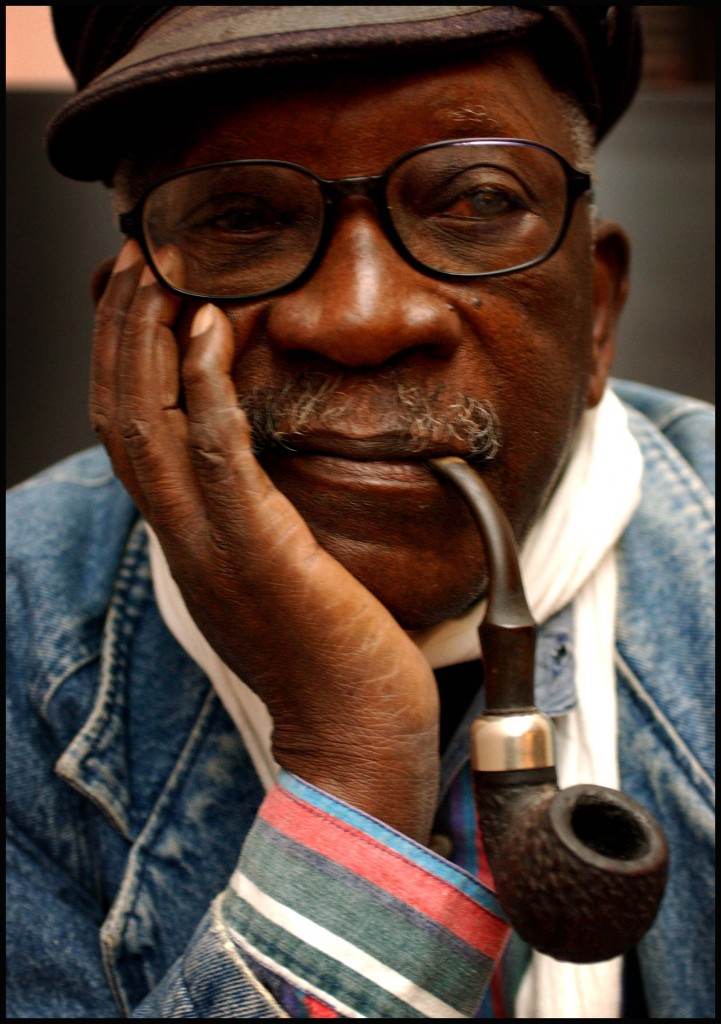
If we were to select a must-see film of the festival, this would be documentary film Sembène! by his biographer and “jarbaat” (the Wolof word for “nephew”) Samba Gadjigo and Jason Silverman, which recently premiered in the UK at the BFI London Film Festival, and the New York Film Festival.

The documentary appears eight years after the Senegalese filmmaker passed away, with a prolific literary and film career. His cinema, with social realist narratives, not only mirrored Senegalese realities through Senegalese eyes, but it aimed to question and challenge those realities, talking to Sembène’s people.

Gadjigo becomes the story-teller of the legacy of Ousmane Sembène, admired by Martin Scorsese, and usually referred to as the father of African cinema, and as a modern “griot”, or story-teller. The film is a celebration of cinema, and particularly of African cinema made in Africa for Africans, with a personal challenge of ensuring Sembène’s legacy is not disregarded but celebrated all over the world.

Ousmene Sembene, senegalese film directorLisa Carpenter (001) 212 962 0060“If Africans do not tell their own stories, Africa will soon disappear” This is arguably Sembène’s most notable quote and how the film opens, in a biographical style, remarkable for its coherence. Inheriting the legacy of his master and “tonton” (the Wolof word for “uncle”), Gadjigo tells the story of how self-revealing was his encounter with Sembène’s work – ‘I grew up in a village with no TV or radio. All I had was the stories of my grandmother (…) When I was 14, I dreamed of becoming French, like the characters in the books I read (…) When I was 17, I discovered Sembène’s stories, with characters like my grandmother, my friends and me. For the first time, I wanted and was proud to be an African’.
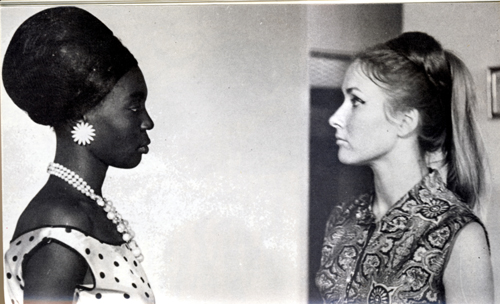
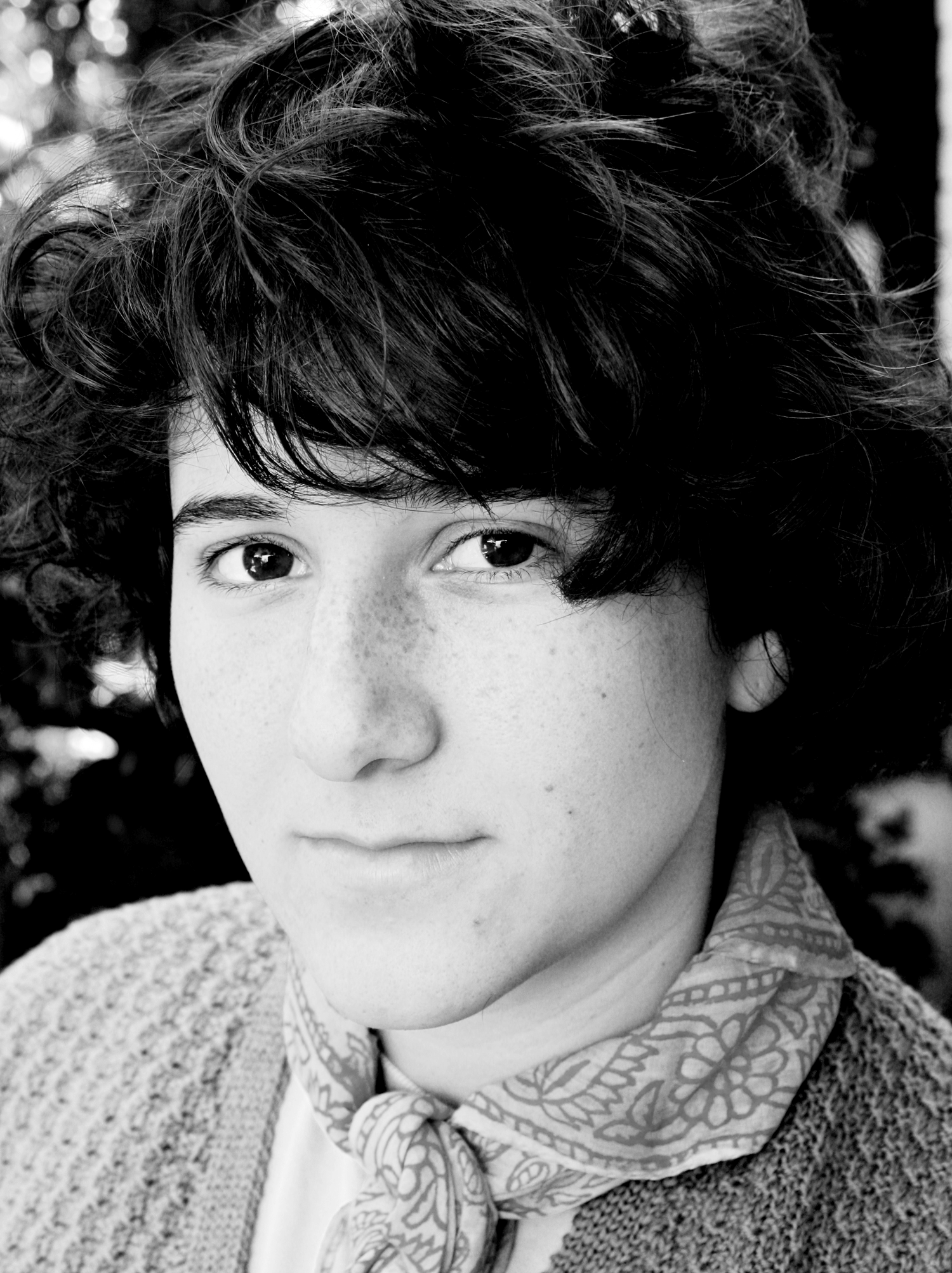
Divided by animated transitions with everyday shores that represent different phases of Sembène’s life, inseparable from his film production, the documentary successfully reviews the legacy of his ground-breaking title, from the first narrative short film every made in Africa, Borom Sarret (1963), and his first feature film, Black Girl (1966) – considered the first one directed by a sub-Saharan African filmmaker – to his last film Mooladé (2004). Sembène is described not jus as remembered by Samba Gadjigo, but also by important figures, such as Manthia Diawara, Malian writer, filmmaker, and scholar; Senegalese author Boubacar Boris Diop; and his son Alain Sembène and housekeeper, Nafi Ndoye.

We discover an artist that devoted his whole life to cinema, with a fierce criticism of French colonial rule in Senegal but also to certain practices of Islam and Senegalese tradition, such as the female excision, that triggered mixed feelings for both Senegal and France. We witness a committed filmmaker, determined to speak about “his” Africa, which was absent from the books – “Africa is not animas and plants, but a philosophy of life, stories…” Sembène said. According to Manthia Diawara, Sembène invented a new language to represent black people. This is the language that the documentary shares with unforgettable scenes of each of his films, all presented as indispensible for the history of film, of Senegal and of post-colonialism. While so doing, we assist to an admiration, which is also full of contradictions and bitter moments. As his son describes him, Sembène had a double personality, the calm and loving Sembène in the night and the strict and hardworking Sembène filming during the day, who wanted to be the best at what he was doing. When the filmmaker finally welcomed Gadjigo’s friendship, he also implied that from that moment onwards, he had the responsibility to keep his legacy alive. ‘I’ll make sure the work you did will never disappear”, argues Gadjigo. And he certainly does. This documentary presents a revolution in the history of African and Universal cinema.

Monday19Oct_6PM_BLACKGIRL2

In completing this tribute to Sembène, CAFF will also be screening Black Girl (1966), recently restored by Martin Scorsese and screened this month at the BFI London Film Festival and The New York Film Festival. The film tells the story of a young woman (Mbisinne Thérèse Diop) who leaves Senegal to work with a French family. Dreaming of a glamorous life in France, the film describes how she leaves without knowing she is falling into a trap, where she would be treated as a maid and feel completely lost.

The documentary Sembène! embodies the whole idea of the Cambridge African Film Festival of challenging the stereotypical representation of Africa, and places the African eye at the heart of the creation of the world universe to be recreated within film. Black Girl allows audiences in Cambridge to see a classic film which did not arise from Hollywood, challenging the wide spread idea that classic films can just emerge from that industry. As Manthia Diawara says in the documentary, “Black Girl will stay new forever”. With both screenings, in tribute to Ousmane Sembène, CAFF invites to re-write the history of film, in such a cinematographic city that Cambridge is.


SUNDAY, 18 October
5.30 PM: SEMBÈNE! (dir. Samba Gadjigo & JASON SILVERMAN, 2015, USA-Senegal) + Q&A with Dr Lindiwe Dovey (SOAS, U. London) and Estrella Sendra (festival director) More details here.


By Caitlin Pearson

@pearanson

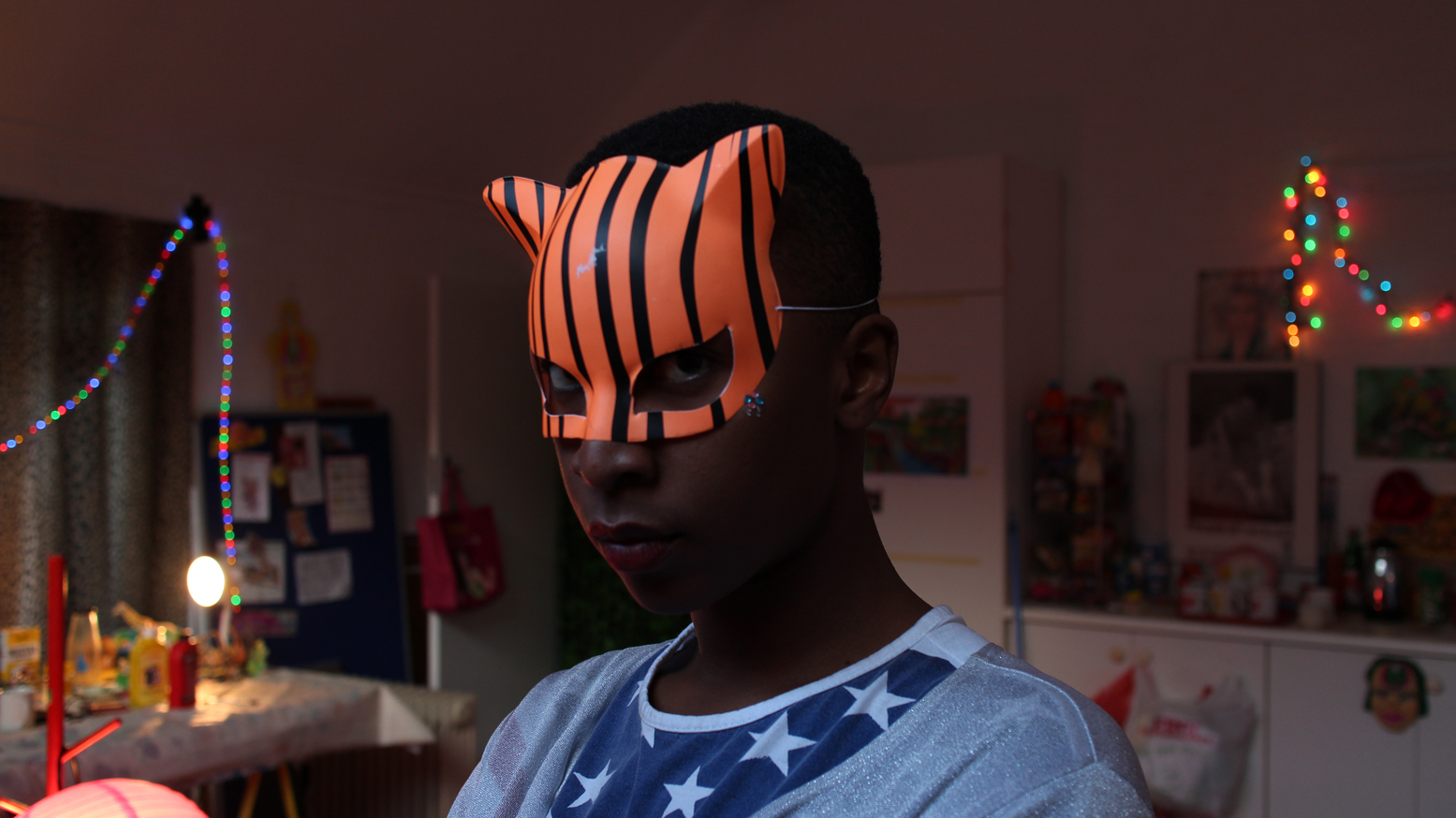
The 14th Cambridge African Film Festival presents ‘Love The One You Love’ – winner of three awards at the 35th Durban International Film Festival in 2014: Best South African Feature Film, Best Direction of a South African Feature Film (Jenna Cato Bass) & Best Actress (to Chi Mhende). Part of the ‘From Africa, with Love’ series.

Sandile loves Terri. Terri loves Sandile, but can’t say the words. They go out dancing, they watch movies, they pose for cheesey photos in front of a beautiful Cape Town sea view. Sandile and Terri’s love is all involving, neon-lit and playful. But even as a picture of their happy relationship is painted in these first scenes, you start to feel like there’s something not quite right…
Meanwhile on another side of the city, Eugene is hanging out with Mo, the little brother of his ex-girlfriend. They shoot pool while the teenage Mo expounds on the mysteries of women and dating. He just wants a buddy, but Euguene has a plan to get back together with Mo’s sister. His longing for this old relationship is poignant, relatable, and obsessive, and Louw Venter’s performance of the character is as much sympathetic as it is disconcerting.

‘Love The One You Love’ is set in a city often described as a ‘bubble’, although one that manages to contain within it many different worlds. Through this unconventional love story, different parts of these worlds appear, giving a sense of place, people and atmosphere that feels grounded in real life. Sandile and Terri’s relationship plays out in the intimate space of her colourful apartment, covered in plastic toys and trinkets. But the bubble of their relationship also draws in many other characters from the city: a sangoma, a hypnotist, a pastor, a taxi driver and even a private detective. Along with the audience, all are invited to grapple with the uncertainty, or conspiracy (?) of Sandile and Terri’s love.

This is the first feature from director Jenna Cato Bass. Fed-up with waiting for financing to come through, she went ahead and made the film on a nano-budget, using two handheld cameras to capture some remarkable improvised performances, up close and personal. Standing over their shoulders and peering in to their lives, you feel like you are really there in the room with them: touching the cold porcelain of a figurine, feeling the bite of the city’s wind at your neck. Bass puts you slap-bang in the middle of the Sandile and Terri’s relationship, at the heart of its paradoxical warmth, confrontation, excitement and emptiness.

As the plot develops, bizarre occurrences and magical lurid scenes from another world punctuate the narrative, blurring the line between fantasy and reality. The film seems to be asking something universal, but also specifically South African: how do we think and act in this gulf between the expectations we have - of happiness, success, truth, equality - and the reality we live? Drawing together honest storytelling, playful cinematography and compelling performances, Bass conjures up a world both familiar and bizarre.

Bold and original, ‘Love The One You Love’ is the perfect opener to the 14thCambridge African Film Festival, signalling a new wave of South African filmmaking with its own distinctive aesthetic.


We hope the film will be followed by a Q&A with filmmaker, Jenna Cato Bass (via Skype), led by Dr Lindiwe Dovey (SOAS, University of London).

This film is part of a love-themed African film series called ‘From Africa, with Love’, in a collaboration between the five African film festivals in the UK: Africa in Motion (AiM) Film Festival in Scotland, Film Africa in London, Afrika Eye in Bristol, Watch-Africa in Wales, and the Cambridge African Film Festival (CAFF), in association with the BFI UK Audience Network’s LOVE Blockbuster Season.


Love the One you Love,
(Jenna Cato Bass, South Africa, 2014, 105 min)
16 October 2015
Time: 6pm
Venue: Arts Picture House