The festival will be showing the biographical documentary Sembène! on Sunday 18 and his first feature film Black Girl on Monday 19 October.
By Estrella Sendra
If we were to select a must-see film of the festival, this would be documentary film Sembène! by his biographer and “jarbaat” (the Wolof word for “nephew”) Samba Gadjigo and Jason Silverman, which recently premiered in the UK at the BFI London Film Festival, and the New York Film Festival.
The documentary appears eight years after the Senegalese filmmaker passed away, with a prolific literary and film career. His cinema, with social realist narratives, not only mirrored Senegalese realities through Senegalese eyes, but it aimed to question and challenge those realities, talking to Sembène’s people.
Gadjigo becomes the story-teller of the legacy of Ousmane Sembène, admired by Martin Scorsese, and usually referred to as the father of African cinema, and as a modern “griot”, or story-teller. The film is a celebration of cinema, and particularly of African cinema made in Africa for Africans, with a personal challenge of ensuring Sembène’s legacy is not disregarded but celebrated all over the world.
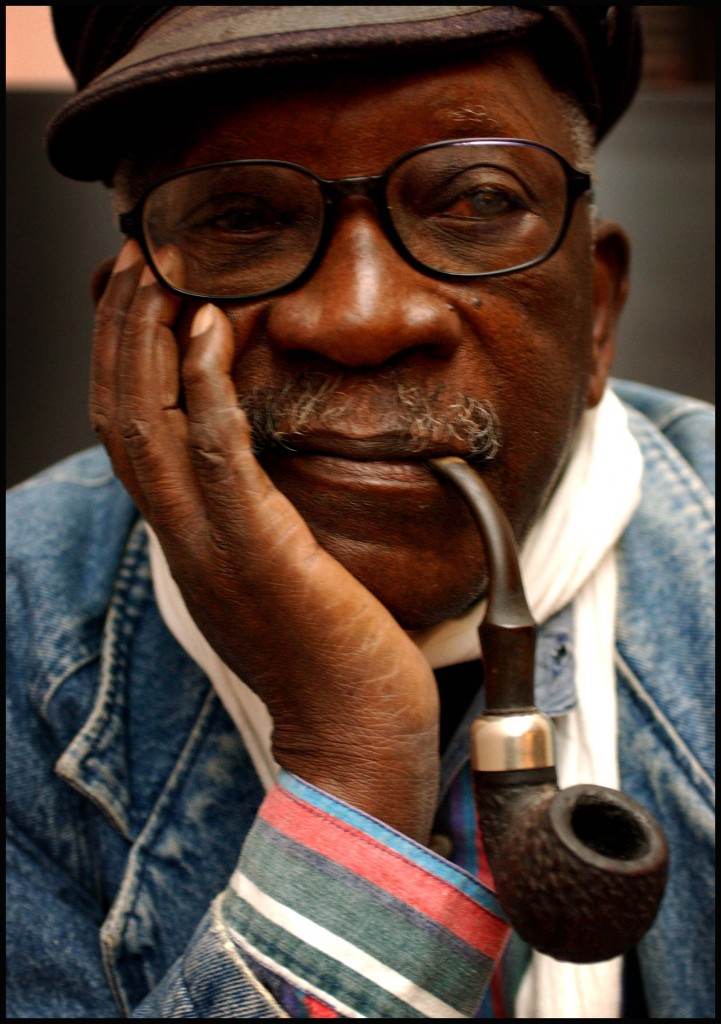 “If Africans do not tell their own stories, Africa will soon disappear” This is arguably Sembène’s most notable quote and how the film opens, in a biographical style, remarkable for its coherence. Inheriting the legacy of his master and “tonton” (the Wolof word for “uncle”), Gadjigo tells the story of how self-revealing was his encounter with Sembène’s work – ‘I grew up in a village with no TV or radio. All I had was the stories of my grandmother (…) When I was 14, I dreamed of becoming French, like the characters in the books I read (…) When I was 17, I discovered Sembène’s stories, with characters like my grandmother, my friends and me. For the first time, I wanted and was proud to be an African’.
Divided by animated transitions with everyday shores that represent different phases of Sembène’s life, inseparable from his film production, the documentary successfully reviews the legacy of his ground-breaking title, from the first narrative short film every made in Africa, Borom Sarret (1963), and his first feature film, Black Girl (1966) – considered the first one directed by a sub-Saharan African filmmaker – to his last film Mooladé (2004). Sembène is described not jus as remembered by Samba Gadjigo, but also by important figures, such as Manthia Diawara, Malian writer, filmmaker, and scholar; Senegalese author Boubacar Boris Diop; and his son Alain Sembène and housekeeper, Nafi Ndoye.
We discover an artist that devoted his whole life to cinema, with a fierce criticism of French colonial rule in Senegal but also to certain practices of Islam and Senegalese tradition, such as the female excision, that triggered mixed feelings for both Senegal and France. We witness a committed filmmaker, determined to speak about “his” Africa, which was absent from the books – “Africa is not animas and plants, but a philosophy of life, stories…” Sembène said. According to Manthia Diawara, Sembène invented a new language to represent black people. This is the language that the documentary shares with unforgettable scenes of each of his films, all presented as indispensible for the history of film, of Senegal and of post-colonialism. While so doing, we assist to an admiration, which is also full of contradictions and bitter moments. As his son describes him, Sembène had a double personality, the calm and loving Sembène in the night and the strict and hardworking Sembène filming during the day, who wanted to be the best at what he was doing. When the filmmaker finally welcomed Gadjigo’s friendship, he also implied that from that moment onwards, he had the responsibility to keep his legacy alive. ‘I’ll make sure the work you did will never disappear”, argues Gadjigo. And he certainly does. This documentary presents a revolution in the history of African and Universal cinema.
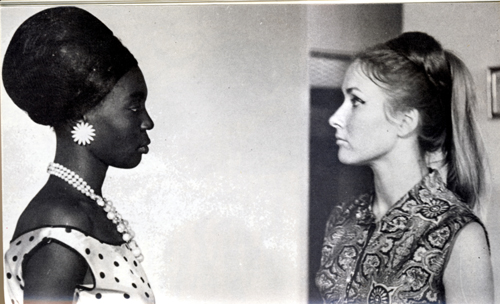
In completing this tribute to Sembène, CAFF will also be screening Black Girl (1966), recently restored by Martin Scorsese and screened this month at the BFI London Film Festival and The New York Film Festival. The film tells the story of a young woman (Mbisinne Thérèse Diop) who leaves Senegal to work with a French family. Dreaming of a glamorous life in France, the film describes how she leaves without knowing she is falling into a trap, where she would be treated as a maid and feel completely lost.
The documentary Sembène! embodies the whole idea of the Cambridge African Film Festival of challenging the stereotypical representation of Africa, and places the African eye at the heart of the creation of the world universe to be recreated within film. Black Girl allows audiences in Cambridge to see a classic film which did not arise from Hollywood, challenging the wide spread idea that classic films can just emerge from that industry. As Manthia Diawara says in the documentary, “Black Girl will stay new forever”. With both screenings, in tribute to Ousmane Sembène, CAFF invites to re-write the history of film, in such a cinematographic city that Cambridge is.
SUNDAY, 18 October
5.30 PM: SEMBÈNE! (dir. Samba Gadjigo & JASON SILVERMAN, 2015, USA-Senegal) + Q&A with Dr Lindiwe Dovey (SOAS, U. London) and Estrella Sendra (festival director) More details here.