|
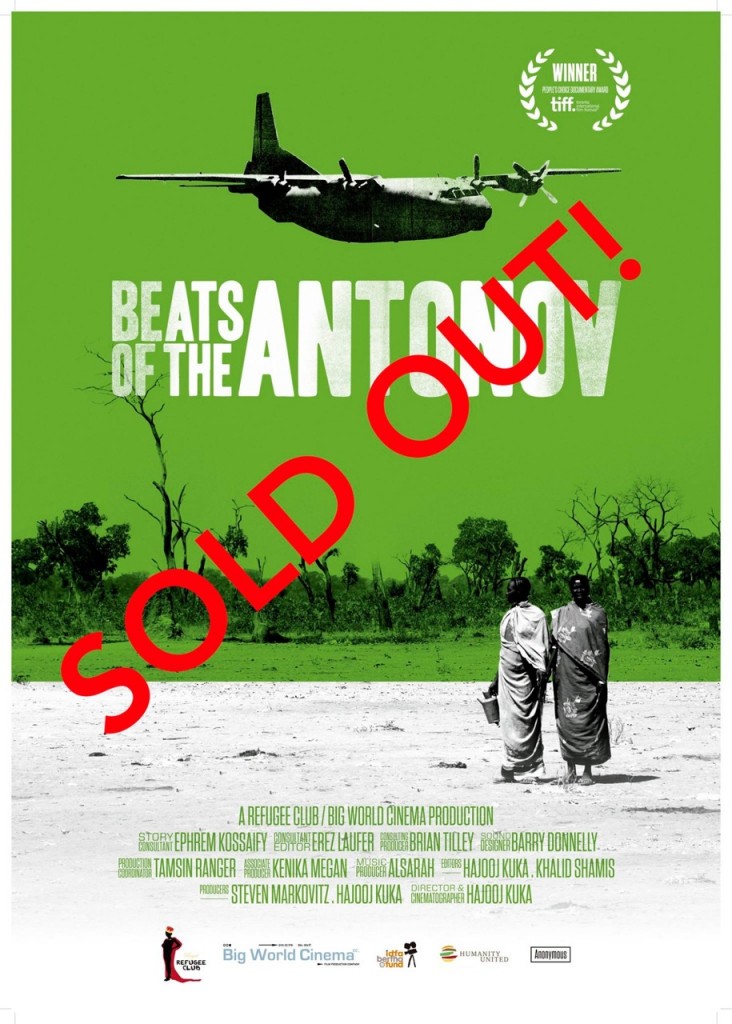
By Sebastiana Etzo According to recent data from UNHCR (2015) in Sudan there are more than 3 millions displaced people. Many of these are from the Blue Nile and the Nuba Mountains, the southern regions of Sudan trapped in an endless and forgotten conflict. Following South Sudan’s independence in 2011 the Nuba people in South Kordofan and some non-Arabic groups in Blue Nile asked to join the new state. Sudan has responded by launching a military offensive on insurgents and civilians on both sides of the border, which has caused many individuals to flee. Hajooj Kuka, journalist and filmmaker, narrates the stories of these people in his acclaimed documentary Beats of the Antonov. The film follows a non-linear path, alternating performances to conversations on music, identity and war, as well as scenes that bring us back to the brutality of the conflict and how it affects and challenges these people. Music is central in the film, as it has traditionally been part of the daily life of the people from the south, and has acquired a stronger and different role in a society threatened by war. The rababa (traditional instrument), and all instruments in the refugee camps, are built from utensils and materials found in the communities, creating new sounds that accompany traditional and modern lyrics. The protagonists of the film use music as a way to forget the hardships and to overcome the suffering of the war. “Girls’ music”, usually associated to weddings, acquires in this context a new political and social meaning, giving women a central stage, while the whole community participate actively in the performances. In the film we have the pleasure to see and to listen to famous Sudanese musicians, among them Alsarah, who talks about the reconfiguration of the public space where “the audience is part of the music and the musicians are part of the audience”. This absence of barriers is also emphasised by the director’s choice of not having a main voice in the film, but allowing everyone (musicians, community people, rebels) to be the protagonists. Music, as it becomes soon clear in the film, is also a form of resistance to an imposed “fake” identity that does not represent Sudanese people. Kuka, through this film and its protagonists, reflects on the identity crisis of the country that is at the roots of its many wars. He thus gives voice to a re-claimed African identity that is proud of its culture and expresses itself, but that it is also able to adapt to the changes and challenges. Hajooj Kuka succeeds to give a different perspective of the country, culturally alive and resilient, while also highlighting its complexities and devastating impact of the war. Beats of the Antonov was awarded best documentary at the Durban International Film Festival 2015 and at the African Film Festival of Cordoba-FCAT 2015, and it is the winner of Grolsch People’s Choice Documentary Award at the Toronto International Film Festival. The film is part of the Music & Resistance CAFF theme and in collaboration with the Festival of Ideas in the City of Cambridge. It will be screened in Cambridge on Tuesday, 20 October, followed by a Q&A via skype with Hajooj Kuka, in conversation with Dr Sharath Srinivasan, director of the Centre of Governance and Human Rights (CGHR) and lecturer at King’s College, University of Cambridge. Tickets are sold out. |